
Battery Module Fastener Torque Audit and Error Proofing is an important engineering and sourcing topic for industrial buyers. Hundreds of structural, electrical, thermal, and cover fasteners create risk when tools, programs, sockets, sequences, access, or rework are not controlled.
This guide explains battery fastener torque from a system perspective. The goal is to convert an attractive catalog claim into measurable requirements, a repeatable commissioning method, and a procurement package that protects both the buyer and supplier during volume production.
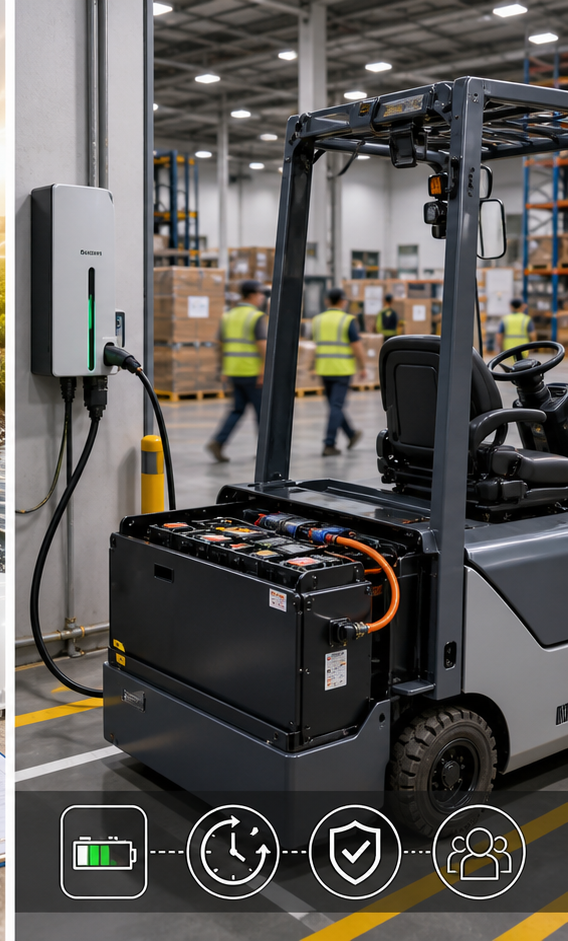
Why battery fastener torque matters
A robust process should classify joints, develop torque strategy, control tools and recipes, verify rundown signatures, prevent wrong-fastener use, trace results, and define audit and rework rules.
Industrial LiFePO4 packs are engineered systems rather than collections of cells. Cell selection, mechanical structure, current paths, contactors, BMS logic, thermal management, communications, production controls, and application interfaces must be validated as one design.
A decision made only from headline voltage, current, power, IP rating, capacity, or price can miss the condition that actually controls service life. The correct approach defines the application, interfaces, fault cases, environment, maintenance model, and acceptance evidence before selecting the final model.
Technical parameters to define
A useful inquiry should state the following parameters. Where data is not yet available, the assumption should be written down and reviewed rather than left for the supplier to guess:
-
Joint function, fastener grade, coating, washer, and reuse policy
-
Torque, angle, clamp load, sequence, and tolerance
-
Tool range, calibration, socket, program, and access
-
Barcode recipe, interlock, rundown curve, and traceability
-
Audit method, stripped thread, missed fastener, and rework
These values must describe one consistent duty. For example, electrical limits should match the real load and temperature, hydraulic values should refer to the same flow point, and environmental claims should identify the test condition. Model-specific drawings and revision-controlled data are more useful than broad family brochures.
Selection and validation workflow
The following sequence helps a distributor or OEM move from initial inquiry to a production-ready approval:
-
Develop parameters on production joints
-
Challenge wrong programs and fasteners
-
Audit clamp load or breakaway appropriately
-
Review abnormal rundown curves
-
Trace every critical result to pack serial
Commissioning and pilot results should be retained with serial numbers, settings, measured values, photos, and deviations. That baseline helps service teams distinguish a product defect from installation, application, or configuration problems and makes repeat orders more accurate.
Common mistakes that create field failures
The failures below are common because a quick demonstration may not expose them. They usually appear after real load, repeated cycling, temperature change, transport, contamination, or service work:
-
Using one torque for visually similar joints
-
Relying on paint marks as torque proof
-
Calibrating tools without sockets and extensions
-
Retightening completed joints casually
-
Deleting failed rundown records after rework
Preventing these errors during specification and sample approval is much less expensive than correcting them after shipment. A small omitted detail can lead to replacement stock, site labor, freight, downtime, damaged customer confidence, or an avoidable warranty dispute.
B2B procurement and supplier quality checks
FISSION customers include industrial vehicle OEMs, fleet operators, energy-storage brands, swapping-network operators, and equipment distributors. Their sourcing decision should include design evidence, traceability, pilot validation, field diagnostics, export documentation, and lifecycle support.
Request a complete technical package covering construction, critical materials, ratings, test methods, installation, labels, packaging, traceability, and change control. The quotation should identify every option that changes performance. A golden sample should represent the actual production process, not a hand-selected prototype.
Incoming inspection should confirm identity, dimensions, markings, basic function, and risk-based performance on every lot. Critical component or firmware changes should require written approval and, where necessary, renewed testing. Complaints should be linked to production records and closed with root cause and corrective action.
Frequently asked questions
What information should be included in a battery fastener torque inquiry?
Include the real duty, electrical or hydraulic interfaces, environmental conditions, quantity, destination market, required documents, installation constraints, and acceptance tests. Photos and drawings of the target equipment often prevent expensive assumptions.
Can a catalog rating guarantee field performance?
No. A rating is meaningful only with its test conditions and limits. Buyers should confirm the actual load, temperature, installation geometry, operating cycle, protection devices, and surrounding system before approval.
How should the production sample be approved?
Before final approval, the buyer should ask the supplier to identify the exact evidence for every critical claim, the measurement uncertainty or test tolerance, and the person responsible for closing deviations. Repeat orders should be checked against the approved bill of materials, drawings, firmware, labels, and packaging so that an apparently minor substitution does not alter safety, compatibility, installation, or service performance.
Test a production-representative sample under the intended duty and important fault cases. Freeze the approved configuration, drawings, settings, labels, and packaging, then define incoming checks and written change control for mass production.
Related technical guides
Continue with our guide to battery pack traceability.
Also review our guide to custom battery BMS communication.
Also review our guide to industrial lithium battery warranty terms.
Contact FISSION
For model selection, OEM requirements, samples, drawings, test documentation, and project quotations, send the application, specifications, quantity, destination market, and expected schedule to our team.
Phone / WhatsApp / WeChat: +86 18969667183. Tel: +86 18657665923. Website: https://www.zjfx-tech.com/